How to Find Your Perfect Foundation Shade
Struggling to find the right foundation shade? Our expert guide explains how to identify your skin's undertone for a perfect colour match every time.
Last updated: 04/21/2026
| You are currently signed in as: csr signout | Session open for : Reset customer | Customer Cart | QuikSearch |
The quest for the perfect foundation can feel endless. We’ve all experienced the frustration of a shade that looks flawless in the bottle but creates a visible line along the jaw or appears unnatural in daylight. Finding your true match is the secret to a polished, seamless complexion that looks and feels like your best skin.
This guide will demystify the process, helping you understand your skin’s unique characteristics so you can choose your ideal foundation shade with certainty, whether you’re shopping online or visiting us at a counter.
A perfectly matched foundation does more than just cover imperfections. It evens out your complexion, enhances your natural beauty and creates a flawless canvas for the rest of your makeup. It’s the difference between makeup that looks like makeup and a complexion that simply looks perfected
A good match might look acceptable in your bathroom mirror, but a great match is imperceptible in any light. It blends so seamlessly with your skin that it’s impossible to tell where your foundation ends and your skin begins. This is the Estée Lauder standard: a shade so true to you it feels like it was made just for you.
When your foundation is a perfect match, you feel polished and put-together. It allows your confidence to shine through, knowing your skin looks healthy, radiant and authentically you. A flawless base empowers you to take on the day.
The first step to finding your perfect shade is understanding two key elements of your complexion: your skin tone and your undertone.
Your skin tone is the surface colour of your skin. It can be described as fair, light, medium, tan, deep or rich. Skin tone can change throughout the year; you may be a lighter shade in the winter and a deeper one after a summer holiday.
Your undertone is the subtle, permanent shade that lies just beneath your skin’s surface. It doesn’t change with the seasons. This underlying hue is what ultimately determines whether a foundation looks natural or slightly ‘off’. Undertones are typically categorised as cool, warm or neutral.
Identifying your undertone is easier than you might think. A few simple observations can reveal the natural hue of your skin, guiding you to your perfect foundation shade.
Look at the veins on the inside of your wrist in natural daylight.
- If your veins appear distinctly blue or purple, you likely have a cool undertone.
- If they look greenish, you have a warm undertone.
- If you can’t decide whether they are blue or green, or you see a mix of both, you most likely have a neutral undertone.
Think about which type of jewellery best complements your skin.
- If you feel that silver, platinum and rose-gold jewellery make your skin look more radiant, you probably have cool undertones.
- If you gravitate towards yellow gold, you likely have warm undertones.
- If you can wear both silver and gold without one looking noticeably better than the other, you are probably neutral.
Consider how your skin behaves in the sun.
- If you tend to burn easily and your skin turns pink or red, you likely have a cool undertone.
- If you tan easily and your skin turns golden brown, you have a warm undertone.
- If you sometimes burn, but that burn eventually fades into a tan, you may have a neutral undertone.
Once you’ve completed the tests, you can determine your undertone category. At Estée Lauder, we use C, W and N in our shade names to make finding your match simple.
Cool undertones are characterised by a pinkish or blue-red cast to the skin. Our foundation shades marked with a ‘C’ are formulated to complement this undertone.
Warm undertones have a distinct golden, yellow or peachy hue. Look for shades marked with a ‘W’.
A neutral undertone is a balanced mix of both cool and warm hues. Your skin’s surface tone may be more prominent than any pink or golden tones. This is the most versatile undertone, and our shades marked with an ‘N’ are designed for you.
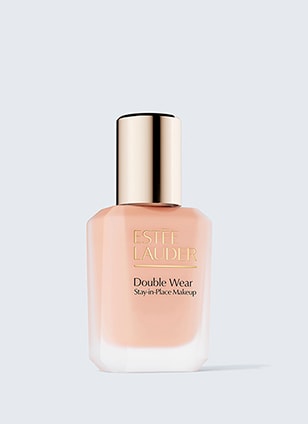
Understanding our shade system is the final step. Each Estée Lauder foundation shade, like our iconic Double Wear Stay-in-Place Makeup, has a name that consists of two numbers and a letter.
- The first number represents the shade intensity (from 1 for the lightest to 9 for the deepest).
- The letter represents the undertone (C, W or N).
For example, a shade like ‘2C1 Pure Beige’ is for light skin (2) with a cool undertone (C). ‘4W2 Toasty Toffee’ is for medium-tan skin (4) with a warm undertone (W).
If you have cool (C) undertones, you should choose a foundation with a rosy, reddish or blue base. Avoid yellowish foundations as they can make your skin look sallow.
For those with warm (W) undertones, foundations with a golden or yellow base will look most natural. Shades that are too cool can appear grey on your skin or wash you out.
If you have neutral (N) undertones, you are in the fortunate position of being able to choose from shades with a balance of pink and yellow pigments. These foundations often have a beige base.
Once you’ve identified your shade family, it’s time to test it for a perfect match.
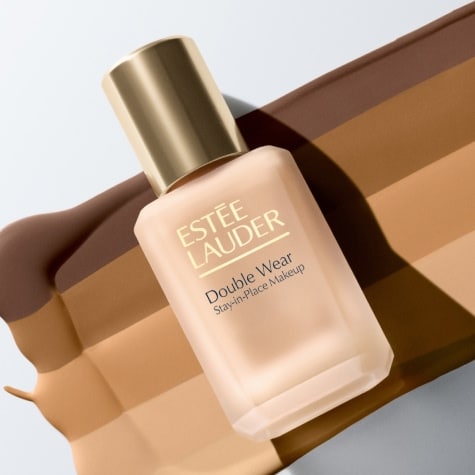
The skin on your hands and wrists is often a different colour from your face. For the most accurate match, apply a few stripes of different foundation shades along your jawline, extending slightly down onto your neck. The shade that disappears into your skin without any blending is your true match.
Artificial lighting in stores can be deceptive. It can alter the appearance of a foundation shade, making it look warmer or cooler than it truly is. After swatching, step outside into natural daylight to see how the shades really look on your skin.
Sometimes, a foundation’s colour can shift slightly as it dries and mixes with the natural oils on your skin. This is called oxidation. Wait a few minutes after applying your swatches to see if the colour changes. A true match will remain seamless even after it has fully set.
We understand it’s not always possible to visit a counter. With our online shade-matching tools, you can find your foundation shade from the comfort of your home.
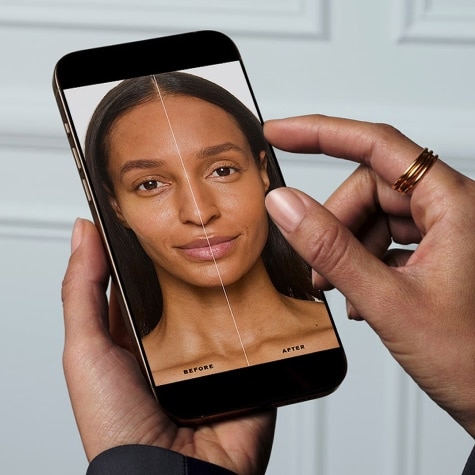
Our Foundation Finder (https://www.esteelauder.co.uk/virtual-try-on/foundation-finder) is the perfect starting point. This interactive tool guides you through identifying your skin tone and undertone. You can also use our Virtual Try-On tool, which uses your camera to show you how different shades of Double Wear will look on your skin in real-time.
If you have a foundation from another brand that is a good match, you can often use it as a reference point. Many online shade-matching websites can help you find your equivalent Estée Lauder shade.
The perfect foundation isn’t just about the colour. The formula and finish are just as important for achieving a flawless look.
Your skin type will determine which foundation formula works best for you.
- Oily or Combination Skin: A long-wearing, oil-free and mattifying formula like Double Wear Stay-in-Place Makeup will help control shine and stay flawless all day.
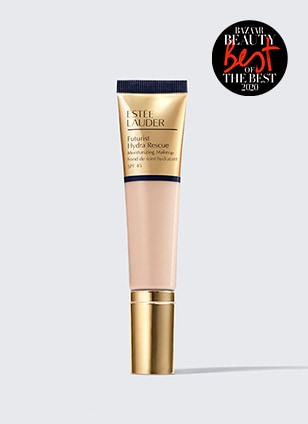
- Dry or Normal Skin: Look for a hydrating and moisturising formula. Our Futurist Hydra Rescue Moisturizing Makeup SPF 45 provides medium buildable coverage while plumping skin with hydration for a radiant glow.
The finish of your foundation determines the final look of your skin.
- Matte: A shine-free, velvety finish. Ideal for oily skin types or for a polished, full-coverage look.
- Dewy/Radiant: A luminous, glowing finish that reflects light. Perfect for dry or mature skin.
- Satin: The perfect in-between. It offers a natural, skin-like finish that is neither too matte nor too dewy.
A few simple adjustments can elevate your foundation application.
This often happens when you test foundation on your hand. Always swatch on your jawline in natural light to find a shade that seamlessly blends with both your face and neck.
Even with a perfect match, it’s crucial to lightly blend your foundation down your neck and onto your décolletage if it’s exposed. This ensures a completely seamless transition and avoids any visible lines.
The tools you use can significantly impact the finish. For full, flawless coverage, use a foundation brush. For a more natural, radiant effect, try a damp makeup sponge. For the lightest application, your fingertips can work beautifully to warm and melt the product into the skin.
Finding your perfect foundation is a journey of discovery. By understanding your unique skin tone and undertone, you can choose a shade that enhances your natural beauty and provides a flawless canvas.